The Great Depression
Economic collapse, unemployment, bank failures and poverty affected millions around the world.
History · society · culture · design
A decade of depression and reform, radio and cinema, dust and steel, swing orchestras and a world moving toward war.
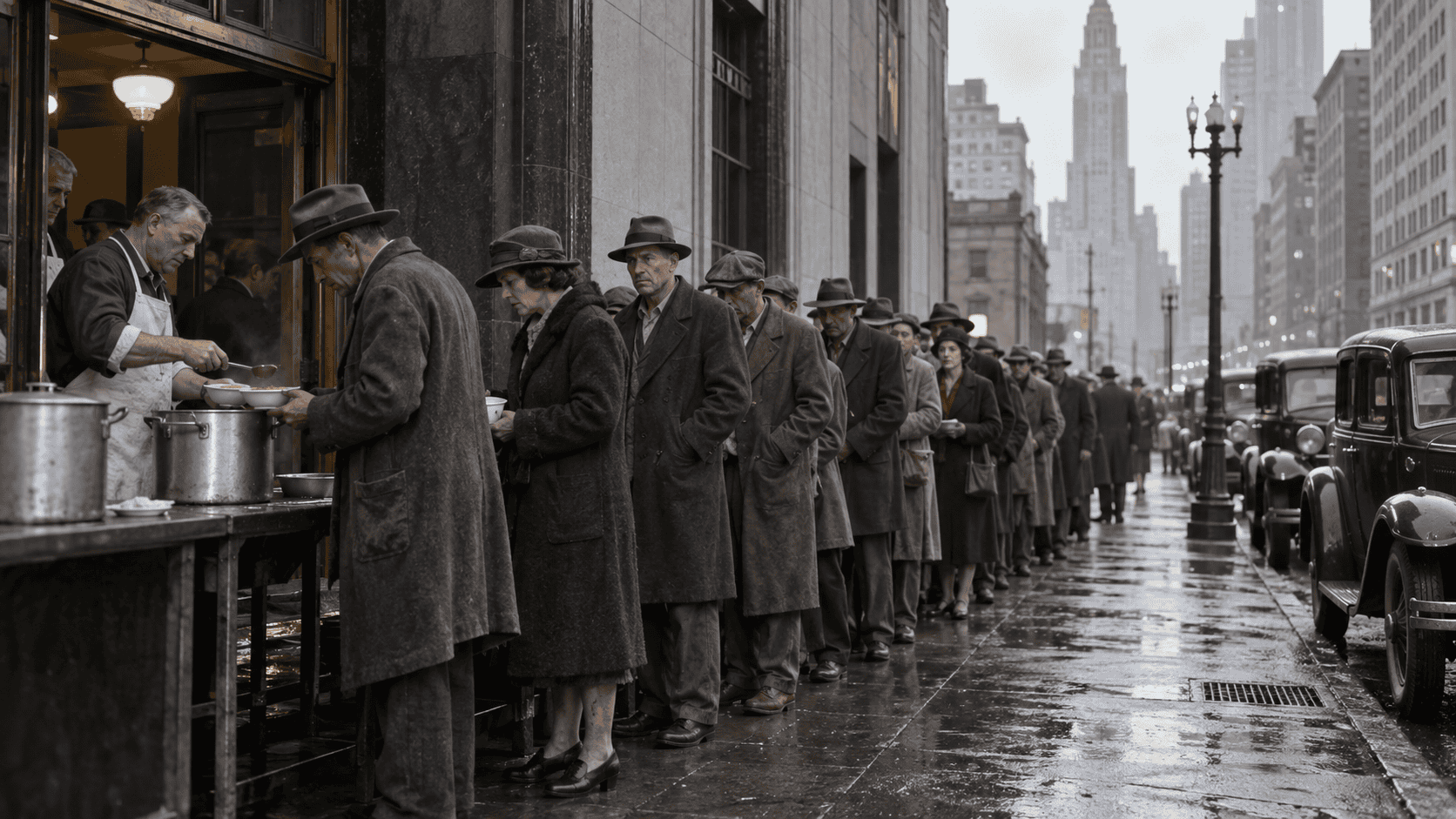
The 1930s were the years from 1930 through 1939, a decade defined by the Great Depression, mass unemployment, social upheaval, and dramatic political change.
In the United States, the stock market crash of 1929 gave way to bank failures, collapsing businesses, and widespread insecurity across cities, farms, and industrial regions.
Franklin D. Roosevelt responded with the New Deal, a broad set of programs designed to provide relief, promote recovery, and reform financial and labor systems.
Across the world, democracy faced mounting pressure as fascist regimes expanded in Germany and Italy, imperial Japan intensified its aggression in Asia, and the Spanish Civil War previewed a larger international conflict.
Yet the decade was not defined by hardship alone.
Radio became the dominant household medium, Hollywood released some of its most celebrated films, swing music filled dance halls, and Art Deco and Streamline Moderne continued to shape the visual language of modern life.
By 1939, the decade closed with the outbreak of World War II, ending the uneasy balance between recovery, entertainment, and gathering geopolitical crisis.
Defining signals
Economic collapse, unemployment, bank failures and poverty affected millions around the world.
Government intervention expanded through public works, relief programs, and major regulatory reforms.
Families gathered around radios for news, music, comedy, drama and political speeches.
Major studios produced enduring films that defined glamour, fantasy, comedy and spectacle.
Dance music became one of the clearest sounds of the decade.
Architecture, interiors, transport and product design embraced modern curves and elegant geometry.
Environmental disaster displaced farming families and reshaped American migration patterns.
Authoritarian expansion and failed appeasement pushed the world toward global conflict.
Chronicle
The world economic crisis defined the decade through unemployment, business failures, bank collapses, and mass hardship.
Franklin D. Roosevelt launched relief, recovery, and reform programs that reshaped the role of the federal government in American life.
Authoritarian regimes expanded in Germany, Italy, and elsewhere, intensifying political extremism across Europe.
The conflict between Republicans and Nationalists became a global ideological battleground and a warning of wider war to come.
Drought, soil erosion, and dust storms devastated farms across the Great Plains and forced many families to migrate.
Britain’s king abdicated in 1936 so he could marry Wallis Simpson, creating a major constitutional crisis.
The destruction of the German airship in 1937 shocked the world and damaged confidence in passenger dirigibles.
The infamous Alabama trials exposed racial injustice and failures of due process in the American legal system.
World War I veterans camped in Washington, D.C., demanding early payment of promised bonuses during the Depression.
Chinese Communists carried out a strategic retreat that helped elevate Mao Zedong as a central leader.
Mussolini’s attack on Ethiopia exposed the weakness of collective security between the wars.
Nazi Germany and the Soviet Union signed a non-aggression pact that stunned the world in 1939.
Nazi attacks on Jewish homes, businesses, and synagogues marked a violent escalation of persecution.
Germany annexed Austria in 1938, demonstrating Hitler’s growing power and European appeasement.
Britain and France allowed Germany to seize the Sudetenland in the hope of preventing war.
Earhart vanished in 1937 while attempting to circumnavigate the globe, becoming one of aviation’s great mysteries.
Japanese forces committed mass atrocities after capturing the Chinese city in 1937.
The skyscraper opened in 1931 and became one of the clearest symbols of New York modernity.
The new British monarch was crowned after the abdication crisis reshaped the monarchy.
The invasion in 1939 triggered the outbreak of World War II in Europe.
Machine age
DuPont’s synthetic fiber promised a new era in textiles and consumer products.
Frank Whittle and Hans von Ohain helped establish the foundations of jet propulsion.
Edwin Land’s optical work led to innovations that would transform photography.
This instrument opened a new scale of scientific observation far beyond light microscopy.
Frequency modulation improved sound quality and reduced static in broadcasting.
Chester Carlson developed the dry copying process that would later revolutionize office work.
Radio detection technology advanced rapidly and became strategically vital by the end of the decade.
László Bíró’s design pointed toward a more reliable everyday writing instrument.
Early amplified guitars helped lay the groundwork for major changes in popular music.
Industrial research accelerated the development of rubber alternatives.
Charles Richter introduced a practical scale for measuring earthquake magnitude.
The concept of an affordable people’s car became one of the most recognizable vehicle projects of the era.
Brighter and more efficient lighting entered industrial and commercial use.
Ruth Wakefield’s creation became one of the most enduring American desserts.
The board game became a Depression-era sensation despite its roots in an earlier design.
The windproof lighter became known for durability and distinctive style.
Transparent acrylic material expanded design and industrial possibilities.
Motorized shaving devices became increasingly practical for everyday grooming.
Early antibacterial medicines helped transform treatment before widespread penicillin use.
Appliances, trains, radios, and vehicles embraced aerodynamic styling as a symbol of modern progress.
Everyday life
Life in the 1930s varied sharply according to class, race, geography and occupation.
For many families, the decade meant unemployment, wage cuts, foreclosures, and constant uncertainty.
Soup kitchens, relief offices, and public works projects became part of daily reality in many communities.
Farmers faced falling prices, debt and ecological disaster, especially in Dust Bowl areas where drought and erosion drove migration westward.
At the same time, affordable entertainment became more important than ever.
Radio dramas, swing records, movie palaces and neighborhood cinemas offered escape as well as shared cultural experience.
Urban design and consumer goods increasingly reflected Streamline Moderne styling, with polished metals, curved forms and machine-age optimism.
The decade also intensified political debate about labor rights, welfare, economic justice, race, nationalism and the responsibilities of government in times of crisis.
Culture in the 1930s balanced hardship with imagination.
While millions faced economic insecurity, radio created a common listening public and movie theaters offered glamour, romance, comedy and escape.
Swing transformed jazz into a national dance culture, with big bands filling ballrooms and spreading through live performance, records and broadcasts.
At the same time, documentary photography, social realist art and New Deal arts programs turned attention back toward labor, poverty and everyday experience.
The decade’s visual identity remained deeply tied to Art Deco and Streamline Moderne, combining luxury, speed and modernity even during years of scarcity.
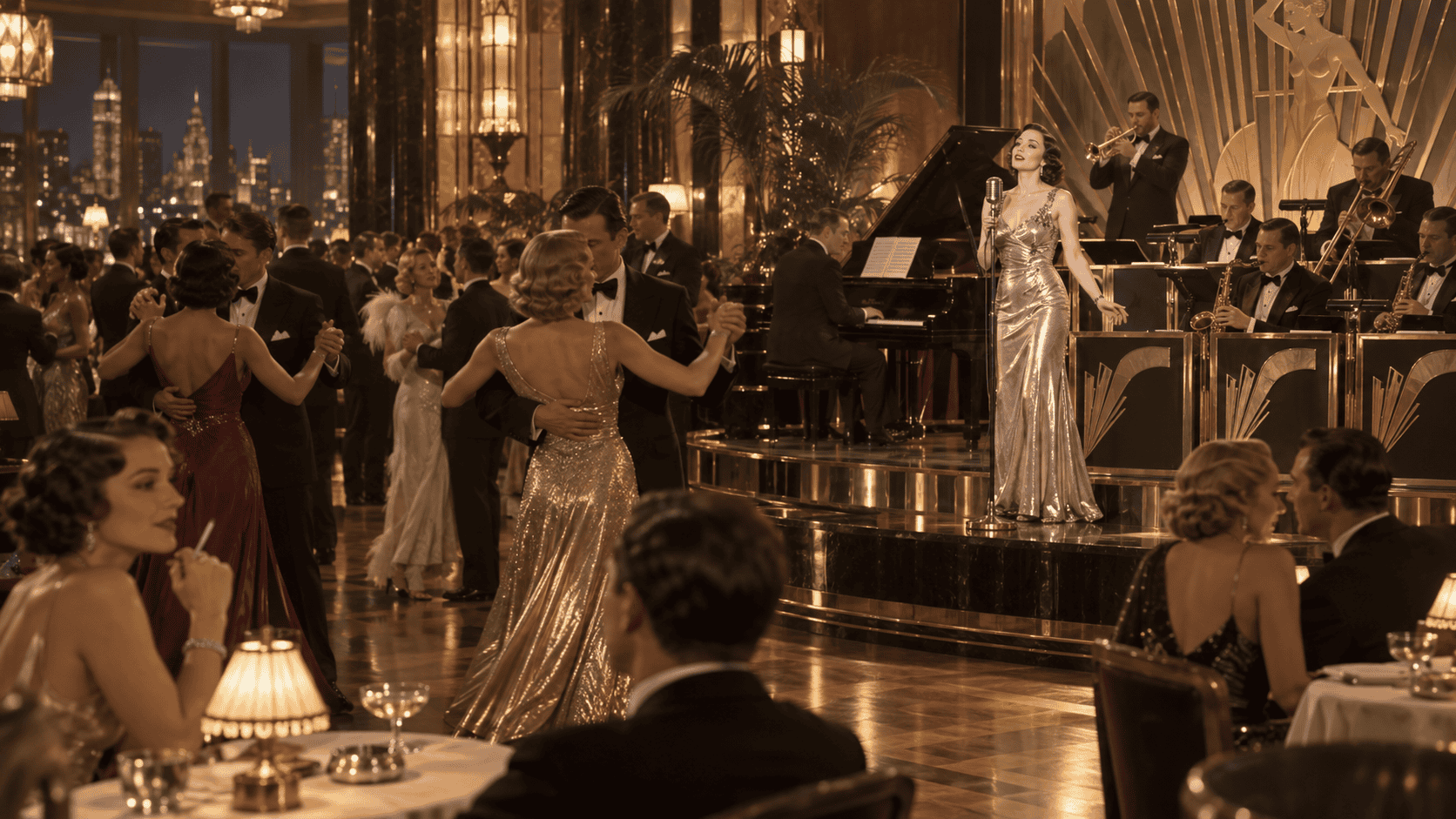
Bold geometry, luxury finishes, and elegant ornament remained influential in architecture, interiors, and design.
Artists explored dreams, symbolism, and the subconscious in increasingly imaginative ways.
Dance-oriented jazz turned ballrooms into social stages and gave the decade much of its rhythm.
Painters, photographers, and writers focused on labor, poverty, and everyday hardship.
Fast dialogue, romantic chaos, and social satire defined one of Hollywood’s signature genres.
Serialized daytime radio dramas built loyal audiences in homes across the country.
The comic strip captured public enthusiasm for science fiction adventure.
Cheap magazines filled with crime, horror, romance, and adventure stories thrived on newsstands.
Large ensembles led by star bandleaders dominated popular music and dancing.
Curved forms and machine-age smoothness became a hallmark of late-1930s architecture and product design.
Images by government and independent photographers shaped public understanding of the Depression.
Radio stood at the center of family entertainment, news, comedy, drama, and advertising.
Film stars, studio publicity, and elegant costume design shaped idealized images of style and success.
Exaggerated tailoring emerged in urban youth culture near the end of the decade.
Outdoor car-oriented entertainment and roadside leisure began to spread.
New Deal arts programs brought performance, jobs, and experimentation to communities.
Disney animation became a major part of mass culture and family entertainment.
Its fantasy world and Technicolor imagery became central to the decade’s cultural memory.
The 1938 comic-book debut launched the modern superhero tradition.
The novel and later film became a massive cultural event and a defining blockbuster of the era.
Urban America
Wall Street, radio networks, publishing, and Broadway kept the city central even in hard times.
Industry, politics, labor, and the lingering memory of gangster culture shaped the city’s public image.
Hollywood expanded its global influence while the metropolis kept spreading outward.
The auto industry remained crucial while labor conflict and industrial change intensified.
The Golden Gate Bridge and Bay Bridge helped symbolize engineering ambition on the Pacific coast.
The capital became the administrative heart of the New Deal.
Resort culture and Art Deco architecture gave the city a distinctive interwar character.
Jazz, nightlife, and local traditions kept the city culturally influential.
The city grew as a regional business and transportation center in the South.
Universities, publishing, and old urban institutions gave Boston a strong intellectual profile.
Manufacturing, shipping, and established institutions anchored the city during difficult times.
The city felt the effects of migration, river commerce, and industrial adjustment.
Steel and heavy industry defined the city’s economy and labor politics.
Aviation and Pacific trade signaled the city’s long-term growth potential.
Beale Street and the blues kept Memphis vital in American music culture.
Oil and regional business helped support expansion despite national turmoil.
Military and naval development boosted the local economy on the Pacific coast.
Milling, retail, finance, and progressive politics shaped the Twin Cities.
Regional trade and Rocky Mountain identity made Denver an important western hub.
Heavy industry and urban life reflected both the strength and vulnerability of industrial America.
Silhouette & style
1930s fashion moved away from the dropped-waist look of the 1920s toward longer, more fluid silhouettes and stronger tailoring.
Women’s eveningwear emphasized satin, bias-cut drape, exposed shoulders and Hollywood-inspired elegance, while daywear balanced polish and practicality.
Men’s suits featured broader shoulders, structured jackets, wider lapels and polished accessories such as fedoras, brogues and spectator shoes.
The decade’s style reflected both restraint and glamour, combining Depression-era realities with the aspirational influence of film stars and luxury design.
Designers used diagonal cutting to create fluid, body-skimming silhouettes.
Very wide trousers remained an eye-catching statement in men’s fashion.
Luxurious wraps completed many glamorous evening looks.
Soft felt hats were a near-universal part of polished male dress.
Women’s sleeves often added volume and softness to daywear and formal looks.
Broad, structured tailoring gave men’s suits a confident silhouette.
Hollywood-inspired glamour made dramatic eveningwear highly desirable.
Perforated leather shoes balanced practicality and style.
A stronger shoulder line became more fashionable late in the decade.
Though associated with the 1920s, cloche-inspired hats remained present in early-1930s wardrobes.
Resort fashion favored comfort, movement, and dramatic drape.
Two-tone footwear added flair to daytime and semi-formal outfits.
Eveningwear used exposed shoulders and necklines for sophistication.
Textured wool clothing was practical and versatile for men and women.
Colorful plastic jewelry made modern accessories more accessible.
Thicker soles added height and visual impact to women’s footwear.
Matching knits combined polish and comfort in sportswear-inspired dressing.
Wrapped headwear carried theatrical and cosmopolitan appeal.
One-piece utility garments appeared in the late 1930s and became more familiar as war approached.
Western-inspired neckwear offered a regional alternative to standard ties.
Picture palace
The 1930s were one of the most important decades in film history.
Sound cinema matured, studio systems refined star power, and genres such as screwball comedy, horror, musical fantasy, gangster film and prestige historical drama reached a broad audience.
Many of the decade’s films remain central to popular memory of classic Hollywood and international cinema.
Epic historical spectacle made the film one of the decade’s greatest box-office events.
The fantasy classic combined music, color, and unforgettable characters.
Groundbreaking visual effects turned the giant ape into a cinema icon.
Disney proved that a full-length animated feature could become a major hit.
The romantic comedy famously swept the top Academy Awards.
Fritz Lang’s thriller explored fear, guilt, and mass panic in a modern city.
The Marx Brothers used absurd comedy to satirize power and war.
Errol Flynn’s swashbuckling performance defined the classic adventure style.
Charlie Chaplin created a silent-era masterpiece in the age of sound.
The horror film helped shape the modern image of the monster movie.
James Cagney became one of the decade’s great gangster stars.
The anti-war film brought emotional realism to the screen.
A screwball classic built around speed, chaos, and comic chemistry.
Frank Capra turned political idealism into a populist drama.
John Ford’s western revitalized the genre and elevated John Wayne.
Alfred Hitchcock delivered suspense, wit, and tightly controlled storytelling.
Fred Astaire and Ginger Rogers embodied musical elegance.
Mystery and sparkling dialogue made the detective comedy a favorite.
Bela Lugosi’s performance helped define classic screen horror.
The propaganda film remains historically important and deeply controversial.
On the air
The music of the 1930s ranged from swing orchestras and crooners to blues, gospel, country and hot jazz.
Dance halls, radio broadcasts, records and touring circuits helped musicians reach audiences on an unprecedented scale.
The decade’s sound was both socially communal and technically modern, built around microphones, broadcasting and a growing national entertainment market.
The most recognizable popular sound of the decade, built for dancing and big band performance.
Deeply expressive vocal and guitar traditions remained foundational to American music.
Large ensembles transformed jazz into a dominant commercial form.
Soft, intimate male singing flourished in the microphone era.
Django Reinhardt popularized a virtuosic string-based jazz style in Europe.
Close-harmony singing remained a familiar form of popular entertainment.
Country instrumentation and jazz rhythms created a distinctive dance sound.
African American sacred music continued to evolve through choirs, soloists, and radio.
Rhythmically powerful piano playing remained central to jazz and entertainment.
Early commercial country music expanded through radio and records.
Songwriters and publishers continued shaping mainstream American song.
Raw guitar-driven blues from the Mississippi Delta gained legendary status.
Riff-based swing and blues feeling made the style highly influential.
The close-harmony trio rose to national popularity at the end of the decade.
The clarinetist and bandleader became widely known as the King of Swing.
Her phrasing and emotional depth made her one of the era’s defining voices.
Their recordings helped establish core traditions of country music.
Calloway brought flair, scat, and theatrical showmanship to swing performance.
His yodeling style and early recordings remained a touchstone for country music.
The blues guitarist’s recordings became central to later mythology and influence.
Automotive design in the 1930s increasingly embraced aerodynamic styling, integrated bodies, chrome trim and visual sophistication.
Even during economic hardship, cars remained a powerful symbol of mobility, aspiration and industrial modernity.
Luxury marques, affordable city cars and advanced engineering experiments all contributed to a decade that helped define the future shape of the automobile.
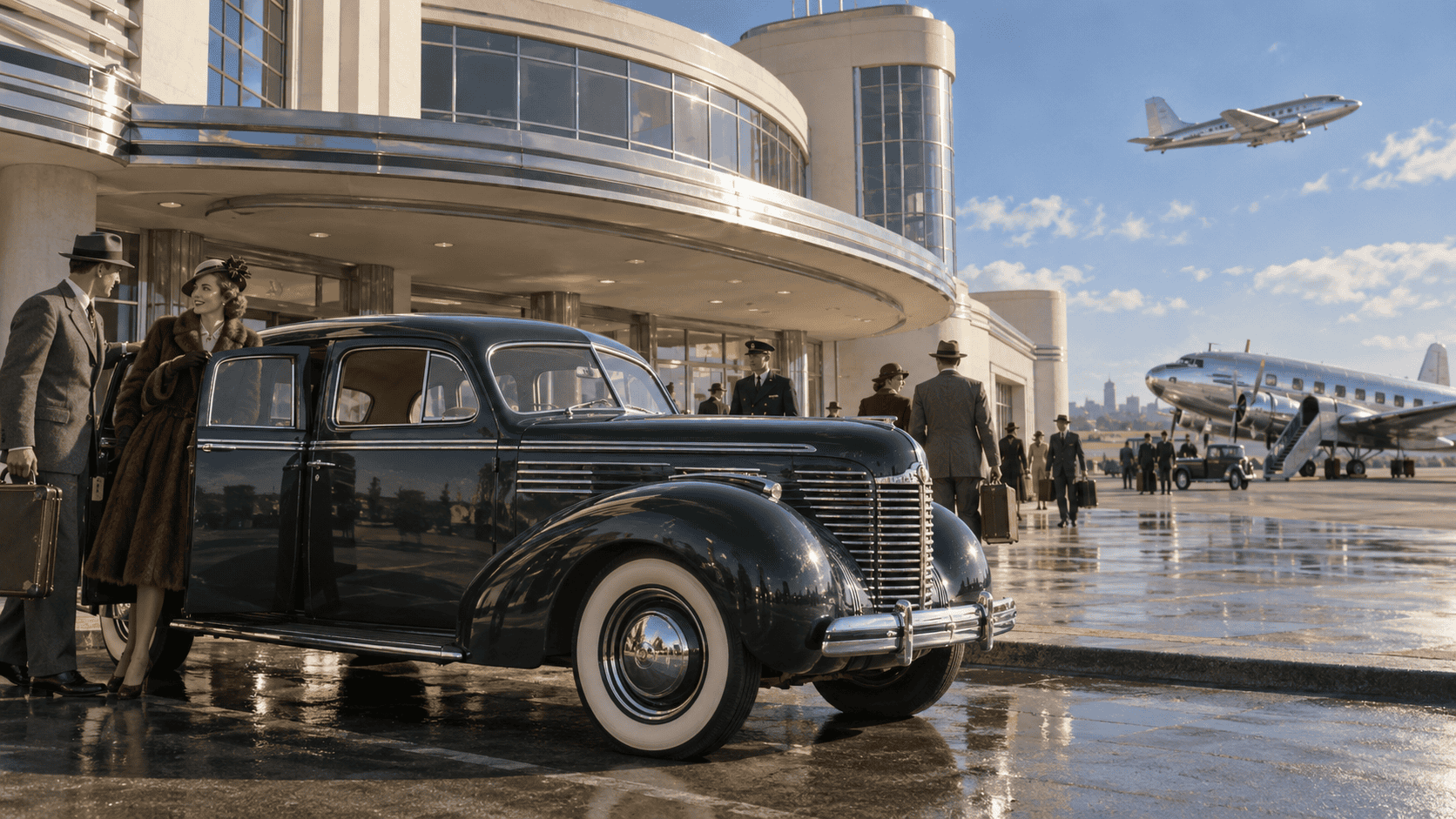
A refined French grand touring car admired for elegance and performance.
Its aerodynamic design made it one of the boldest cars of the decade.
Front-wheel drive and striking design gave Cord a futuristic image.
The supercharged luxury car embodied performance and prestige.
A practical small car aimed at affordability in the European market.
An ultra-luxury automobile that demonstrated engineering ambition at the highest level.
The concept of an affordable people’s car became one of the most recognizable vehicle projects of the era.
Front-wheel drive and unitary construction made it highly advanced.
Its sweeping teardrop body remains one of the classics of French automotive styling.
Streamlined design and V12 power gave Lincoln a distinctly modern look.
The tiny Italian car became a landmark of compact urban motoring.
The concept car anticipated the styling language of later American automobiles.
Distinctive chrome trim helped define the brand’s visual identity.
Even in the Depression, it remained a symbol of extreme luxury.
The German car is remembered for early unibody-style construction.
Smooth performance and prestige kept Packard near the top of the luxury market.
French coachbuilt elegance made the model a concours legend.
Its dramatic streamlined form showed how futuristic styling captured attention.
A dramatic American performance car with unmistakable long-hood style.
The V12 Phantom represented the highest level of British luxury motoring.
Legacy
The 1930s still matter because they reshaped the relationship between government, economy and society under the pressure of crisis.
The decade also defined lasting visual and cultural forms, from radio entertainment and classic Hollywood to swing music, documentary photography and streamlined design.
Politically, it showed how fragile democratic systems could become in the face of fear, economic collapse and authoritarian ambition.
The social reforms, artistic responses and historical warnings of the 1930s continue to influence how later generations think about depression, recovery, inequality, propaganda and the defense of democratic institutions.
Questions
The global economic collapse after 1929 produced massive unemployment, poverty, bank failures and insecurity throughout much of the decade.
The New Deal was Franklin D. Roosevelt’s set of relief, recovery and reform programs designed to address the crisis and stabilize the American economy.
It was the period when radio became the leading mass medium for entertainment, news, drama, comedy, music and political communication.
Swing, big band jazz, blues, country, gospel and crooner-style singing all played major roles in shaping the decade’s sound.
Art Deco and Streamline Moderne used geometry, smooth curves, chrome and sleek surfaces to express elegance and machine-age progress.
The decade ended with the outbreak of World War II in Europe after Germany invaded Poland in 1939.